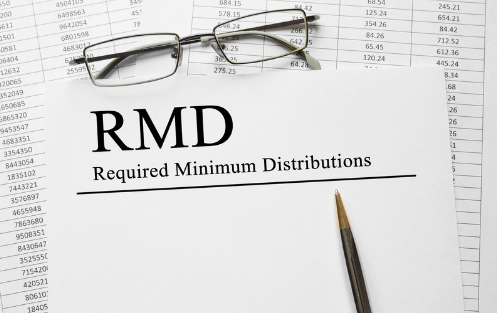
If you have money saved in a Traditional IRA or an old 401(k), you’ve probably heard of something called a Required Minimum Distribution, or RMD. While many people know they have to take money out eventually, there is much more to understand. Making smart decisions about your RMDs can help lower taxes, support your retirement goals, and even leave more money for your family.¹²
An RMD is the minimum amount the IRS requires you to withdraw each year from certain retirement accounts. These rules exist because the money in those accounts has often never been taxed. The government eventually wants to collect its share.¹²
For most people today, RMDs begin the year they turn 73. If you were born in 1960 or later, your RMD age is scheduled to increase to 75 under current law.²
The Hidden Cost of RMD Mistakes
Many retirees think they should wait until the last minute to take their RMD each year. That is not always the best choice. Waiting until December means you could miss opportunities to spread out your tax withholding or use the money throughout the year. Taking monthly or quarterly withdrawals can make budgeting easier and reduce the stress of a large year-end distribution.¹
Another common mistake is taking only the required amount without thinking about taxes. Your RMD counts as ordinary taxable income. A larger withdrawal could move you into a higher tax bracket or increase the amount of your Social Security benefits that are taxed. It may even increase your Medicare Part B and Part D premiums two years later because of the Income-Related Monthly Adjustment Amount (IRMAA).³⁴
Where an Unneeded RMD Could Go
Some retirees do not actually need the money from their RMD to pay their bills. If that is the case, there are still smart ways to use it. You might reinvest the money in a taxable investment account, use it to help children or grandchildren, or build a larger emergency fund. Although you cannot put the money back into your IRA, it can still continue working toward your long-term financial goals.¹
If you are charitably minded, a Qualified Charitable Distribution (QCD) may be worth considering. Beginning at age 70½, you can give money directly from your IRA to qualified charities. If done correctly, the donation can count toward your RMD while keeping that amount out of your taxable income. For many retirees, this can be more tax-efficient than taking the RMD first and then writing a check to a charity.⁵
Roth Conversions and the Still-Working Exception: What to Know
Another planning opportunity happens before RMDs begin. If you retire early or have a few years with lower taxable income, you may benefit from making partial Roth IRA conversions before age 73. Although you pay taxes on the converted amount today, future qualified Roth withdrawals are generally tax-free and are not subject to RMDs during your lifetime. This strategy is not right for everyone, but it may reduce future taxes and provide greater flexibility in retirement.²⁶
If you are still working after age 73 and participate in your current employer’s retirement plan, you may be able to delay RMDs from that employer’s 401(k) if the plan allows it and you do not own more than 5% of the company. However, this exception does not apply to Traditional IRAs, which generally still require RMDs once you reach the applicable age.²
RMDs and New Jersey State Taxes
For New Jersey residents, there is some good news. New Jersey generally does not tax distributions that represent contributions you already paid New Jersey income tax on while you were working. Depending on your situation, a portion of your retirement account withdrawals may be excluded from New Jersey income tax. In addition, many retirees qualify for New Jersey’s Retirement Income Exclusion if they meet age and income requirements. These rules can reduce your state tax bill, but they are separate from your federal tax rules.⁷⁸
New Jersey retirees should also remember that higher taxable income may affect eligibility for certain state property tax relief programs, including ANCHOR, Senior Freeze, and Stay NJ, each of which has its own income rules and qualifications. Planning your withdrawals carefully may help you maximize the benefits available to you.⁹
Looking at RMDs Through a Bigger-Picture
One of the biggest mistakes retirees make is treating RMDs as nothing more than a yearly chore. Instead, think of your RMD as part of your overall retirement income plan. Looking at taxes, charitable giving, investment planning, Medicare premiums, and state benefits together can often lead to better long-term outcomes.¹³⁴⁵⁷
How Millstone Financial Group Can Help
The rules surrounding RMDs can be confusing, and every person’s situation is different. Schedule time with a Millstone Advisor today to discuss a strategy that fits your goals and can help make your retirement savings last as long as possible.¹² Contact us by emailing info@millstonefinancial.net or visiting www.millstonefinancial.net/contact-us/.
Sources
- ¹ Internal Revenue Service (IRS). Retirement Topics – Required Minimum Distributions (RMDs). https://www.irs.gov/retirement-plans/retirement-plans-faqs-regarding-required-minimum-distributions
- ² SECURE 2.0 Act of 2022 (Division T of the Consolidated Appropriations Act, 2023). Provisions increasing the RMD age to 73 and eventually 75 and rules regarding delayed RMDs for certain employer plans.
- ³ Internal Revenue Service (IRS). Publication 590-B: Distributions from Individual Retirement Arrangements (IRAs). Latest available edition. Sections on taxable distributions and RMD calculations.
- ⁴ Centers for Medicare & Medicaid Services (CMS). Medicare Income-Related Monthly Adjustment Amount (IRMAA). Official guidance explaining how higher modified adjusted gross income affects Medicare Part B and Part D premiums.
- ⁵ Internal Revenue Service (IRS). Qualified Charitable Distributions (QCDs). IRS guidance on charitable distributions from IRAs and annual limits.
- ⁶ Internal Revenue Service (IRS). Roth IRAs. IRS guidance explaining that Roth IRAs are generally not subject to lifetime RMDs for the original owner.
- ⁷ New Jersey Division of Taxation. Retirement Income Exclusion. Official guidance describing eligibility requirements and New Jersey taxation of retirement income.
- ⁸ New Jersey Division of Taxation. New Jersey Gross Income Tax Instructions (Form NJ-1040). Sections covering pension, annuity, and IRA income and the Three-Year Rule/General Rule for previously taxed contributions.
- ⁹ New Jersey Division of Taxation. Official program guidance for ANCHOR, Senior Freeze (Property Tax Reimbursement), and Stay NJ, including eligibility and income limitations.
Disclosure:
Advisory services are offered through Millstone Financial Group Limited Liability Company, a Securities and Exchange Commission Registered Investment Advisor located in the State of New Jersey. Insurance products and services are offered through Millstone Financial Group Limited Liability Company. Millstone Financial Group is not affiliated with or endorsed by the Social Security Administration or any other government agency.
All material discussed is for informational purposes only. Opinions expressed are solely those of Millstone Financial Group Limited Liability Company and staff. All topics covered are believed to be from reliable sources; however, Millstone Financial Group Limited Liability Company makes no representations as to its accuracy or completeness. Investing involves risk including the loss of principal.
This information shall in no way be construed as a solicitation to sell securities or investment advisory services to residents of any state other than New Jersey, or where otherwise permitted. All information and ideas should be discussed in detail with your individual adviser prior to implementation.
Millstone Financial Group Limited Liability Company dba Millstone Financial Group does not offer tax planning or legal services but may provide references to tax services or legal providers. This material is intended to provide general financial education and is not written or intended as tax or legal advice. Individuals are encouraged to seek advice from their own tax or legal counsel. Millstone Financial Group may also work with your attorney or independent tax or legal counsel. Please consult a qualified professional for assistance with these matters. You should always consult with a qualified professional before making any tax or legal decisions.